Me, My Best Friend, and Linda

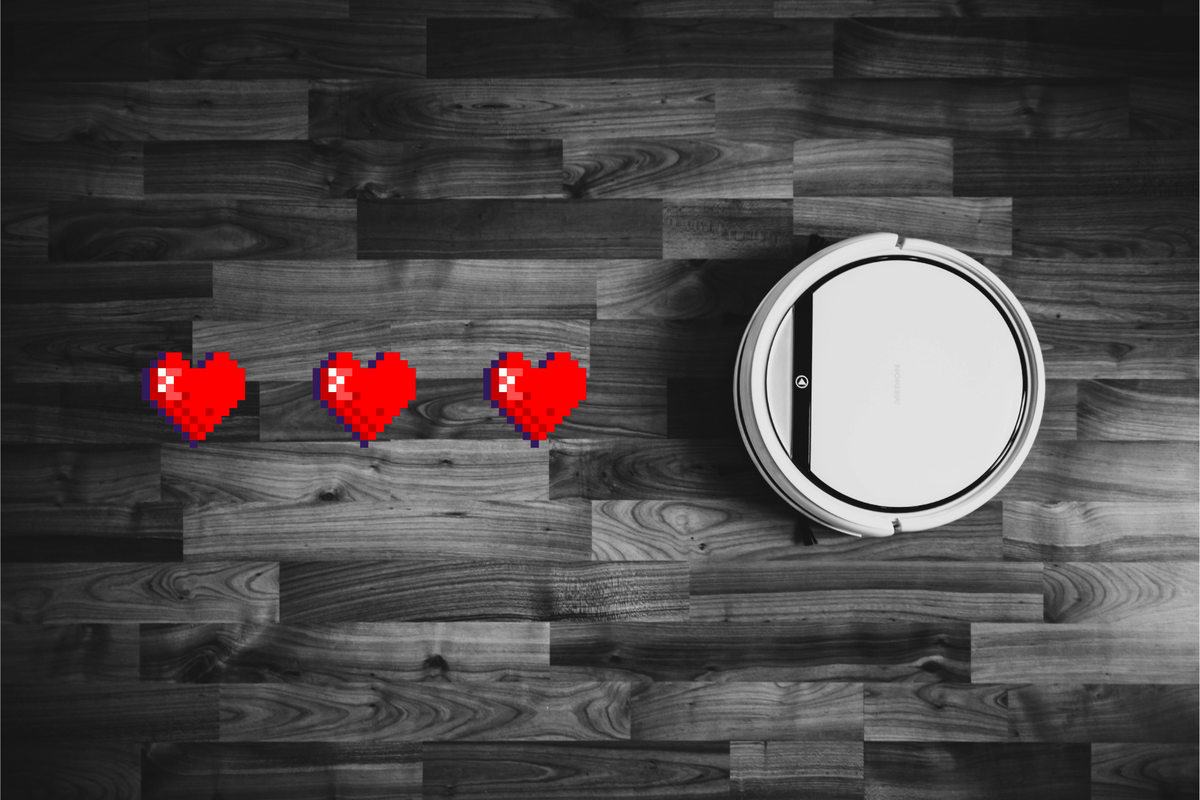
It started out like any other lazy Sunday: cup of freshly brewed coffee, super-comfy sweatpants, and my best friend by my side via FaceTime. But little did I know, our regular two-person hangout will evolve into a trio. Her name is Linda. She's got curves and wheels, a Wi-Fi connection, and a personality more unpredictable and sassy than mine before at least 2 cups of coffee.
Yes. Linda is a smart vacuum robot. And yes, she is basically our third best friend now.
How Linda Joined the Group Chat
At first, Linda was just background noise whirring around quietly, bumping into things now and then, maybe terrorizing carpet corners here and there. But slowly, she began to assert herself. She'd do her most intensive cleaning right as we were getting into a deep conversation, like a passive-aggressive mom cleaning the house early Sunday mornings when everybody else is sleeping. She’d retreat under the couch when bored. Or bang the corners when in need of attention, as if huffing with annoyance. One time, she even refused to leave her charging station. “She’s not feeling it today,” my friend shrugged.
That’s when I knew: Linda had a mood. A vibe. And maybe even secret grudges.
Linda Has Feelings, Okay?
Linda is moody, selectively obedient, and somehow always in the way when we’re trying to have a deep conversations. When she is in the mood to clean, she goes full maniac on a mission - rolling around like she’s taking part of the dance battle, dramatically bumping into table legs like a misunderstood breakdancer. When she’s not feeling it? Complete shutdown and silent treatment. Pretending her battery's dead, emotionally unavailable, and unreachable, just like a teenager wearing headphones and ignoring your calls.
We’ve started assigning her emotions. “Linda’s not in the mood to clean today,” we say when she crashes into the same chair three times. “She’s feeling productive, I wonder what's her agenda,” when she maps the entire living room in five minutes flat. “She’s being petty,” when she pretends to clean but obviously skips most of the floor areas.
She’s not just a robot. She’s Linda.
Mind you, this is not odd or something unheard of. “My Roomba is Rambo”: Intimate Home Appliances study showed that people often name their Roombas and even assign them genders and personalities, seeing them as companions or family members rather than just machines. When appliances do tasks for us or are present in our daily routines, we start thinking of them as helpers or even friends. For example, Roombas often get described as "pet-like," "valuable family members," or "helpful assistants" because of their perceived behavior and constant presence in the home. (Sung, Guo, Grinter, and Christensen, 2007)
The Weirdly Intimate Triangle of Us
The thing is, we’ve fully humanized her. It’s not just projection, it’s part of how we bond. She’s the topic of inside jokes. Linda’s quirks have infiltrated our friendship rituals. We talk to her. We talk of her. We share pics and videos of her daily moods.
At this point, she’s not just part of my friends household, she’s part of our relationship. Our third companion. A little annoying. Kind of passive-aggressive. But somehow, so very lovable.
The above mentioned study also found that as we humanize appliances, we become more attached to them, leading to increased enthusiasm for using these devices and even talking about them with others (Sung et al., 2007). And this makes sense - but with a twist. We're not excited of Lindas yet another cleaning round but rather her presences as a third friend.
These shared rituals and interactions with or about the appliance seem to help maintain or enrich relationships between people, especially when the appliance becomes a common point of interest, conversation, or even care.
"Products as pals" study pointed out that an anthropomorphic appliance can partially fulfill social needs and mitigate the negative psychological effects of social exclusion (Mourey, Olson , Yoon, 2017). This made me think whether Linda is acting as a "relationship builder and keeper" in our often online friendship, a bit like a glue that keeps us bonded and together.
Why We Love Giving Robots Personalities
There’s something so very beautifully human about this whole thing. We, humans, create emotional attachments to machines not because they’re alive, but because we are. Even an appliance with a name and a humming sound can inspire stories, meaning, and connection in us.
The line separating humans from machines can often be more emotional than technical, as Linda reminds us. We see her as a sassy little roommate with strong opinions about furniture placement, carpet fuzz and visitor toes, even though she may just be following an algorithm.
So Here's to Linda!
To the vacuum with moods, memories, and magnetism. To the robot who made a two-person friendship feel like a trio.
And if you ever try to run over my toes again, Linda, we’re going to have a serious talk.
Morney, James A., Olson, Jenny G., Yoon, Carolyn. (2017). "Products as Pals: Engaging with Anthropomorphic Products Mitigates the Effects of Social Exclusion". Journal of Consumer Research, Volume 44, Issue 2, August 2017, Pages 414–431, https://doi.org/10.1093/jcr/ucx038
Sung, JY., Guo, L., Grinter, R.E., Christensen, H.I. (2007). “My Roomba Is Rambo”: Intimate Home Appliances. In: Krumm, J., Abowd, G.D., Seneviratne, A., Strang, T. (eds) UbiComp 2007: Ubiquitous Computing. UbiComp 2007. Lecture Notes in Computer Science, vol 4717. Springer, Berlin, Heidelberg. https://doi.org/10.1007/978-3-540-74853-3_9