Product Design Students Dive Into Game Design World

Game Design as Experience Design
In the Digital Product Design curriculum, game design holds a firm position – not as a mere deviation, but as one possibility for experience design. This spring, the project-based game design course received fresh content and clearer focus: students created their own games independently, starting from concept to working prototype. The entire process started from zero – each student developed their own concept, experimented with different solutions, designed, developed, and finally made their game functional. This was technically a much more demanding project than before – students had to master the practical use of tools and software common in the game design field, in addition to al the creative work.
The focus was on the creative process, which provided an opportunity to experiment with game design both practically and professionally. The new driving force was game designer and lecturer Helene Vellevoog, who helped first-year students reach their first major project – a completely functional, personal, and playable game in the Unity engine. Under Helene's guidance, games were approached primarily as experience design – a personal, experimental, and sensitive medium, rather than just mechanical point-scoring systems.
During the work, students moved through the entire spectrum of game creation: from defining the target group and experience to game logic, narrative, visual language, sound, and technical implementation. The question was asked: what is a game that isn't just a collection of mechanisms, but a complete experience? A game that has the author's choice, perspective, emotion – something that doesn't exist without the person who created it.
Author-Centered Approach
The course's content renewal brought focus to the creative and conceptual aspects of game design. Students weren't required to create just working mechanics, but meaningful worlds – whether surreal wake-up simulations, existential labyrinths, or absurdist platform games. The results were games that were both technically complete and artistically distinctive. Some games made you laugh, some created a slight unease in your soul, some wouldn't let you rest – but none left you indifferent. This approach consciously stemmed from the idea that a game doesn't have to be just an interactive system but can be as expressive as a short film, comic, or poem.
It was through this approach that students managed to achieve true authorship – they weren't simply reproducing familiar mechanisms or currently popular games but brought something personal and perceptual into their games. The entire process was accompanied by continuous prototyping and testing, visual language development, learning technical software, and narrative tuning. Each student planned and managed their project work plan, received support from both the lecturer and coursemates. Learning occurred through doing, through failure, through discovery, and recognition.
Examples of Created Games
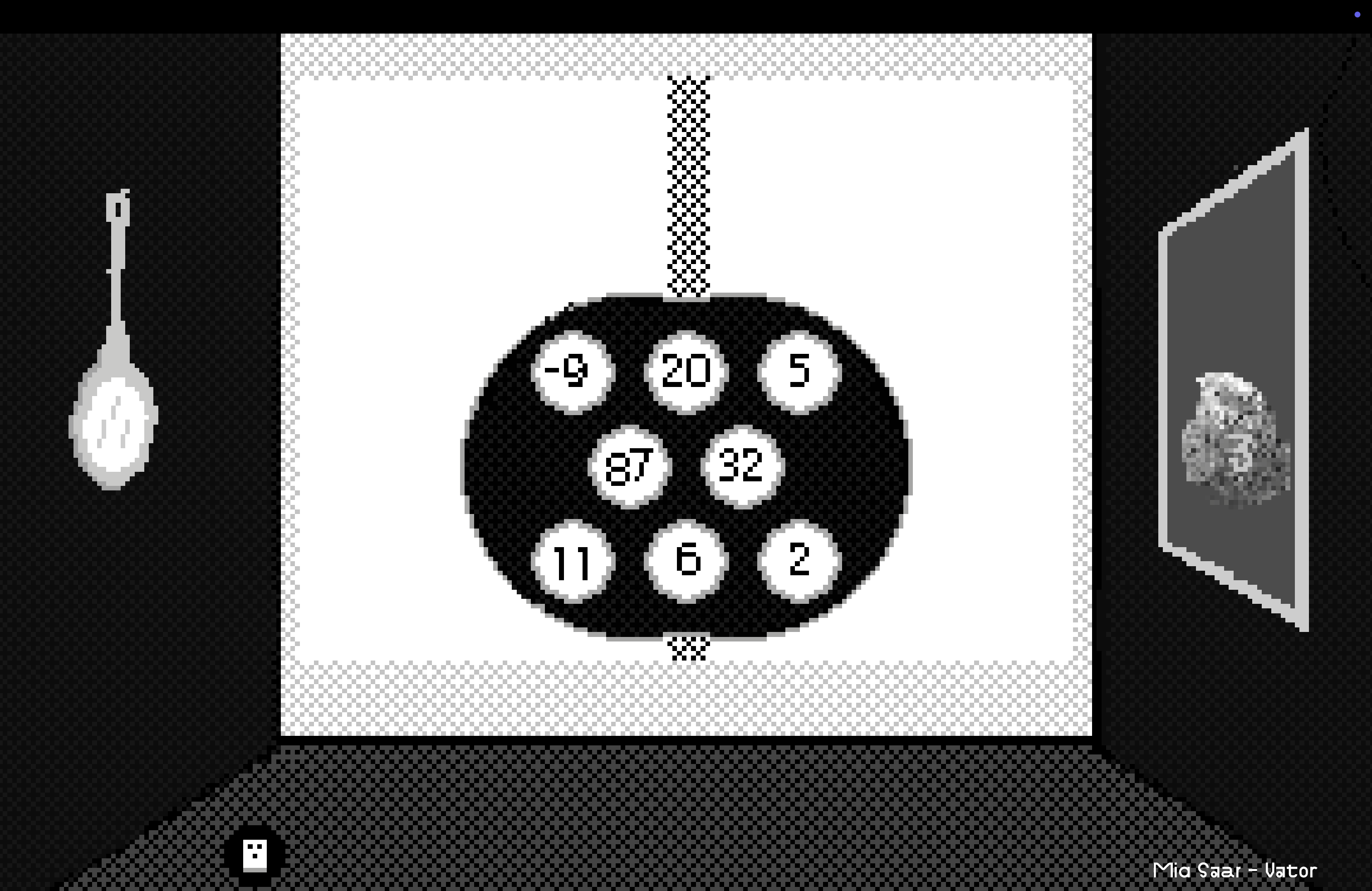
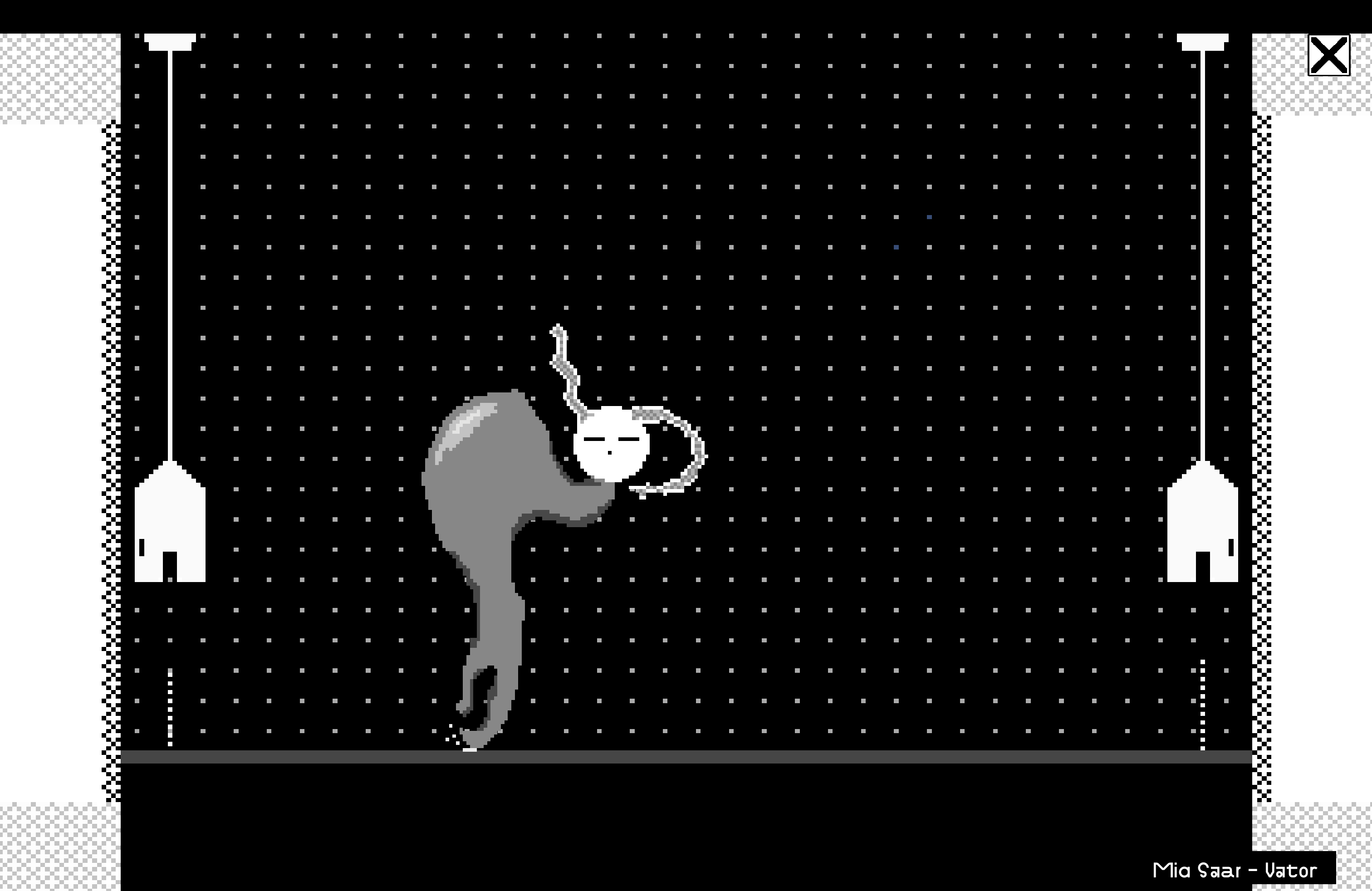
Mia Saar - Vator
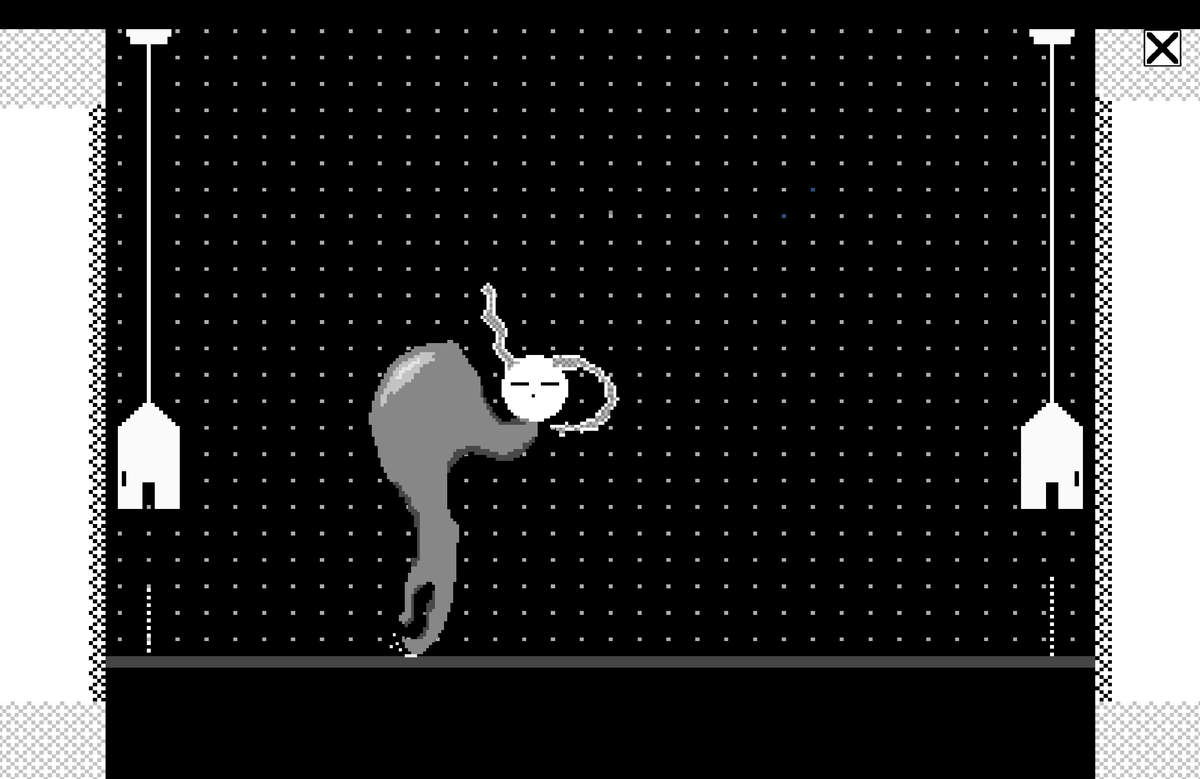
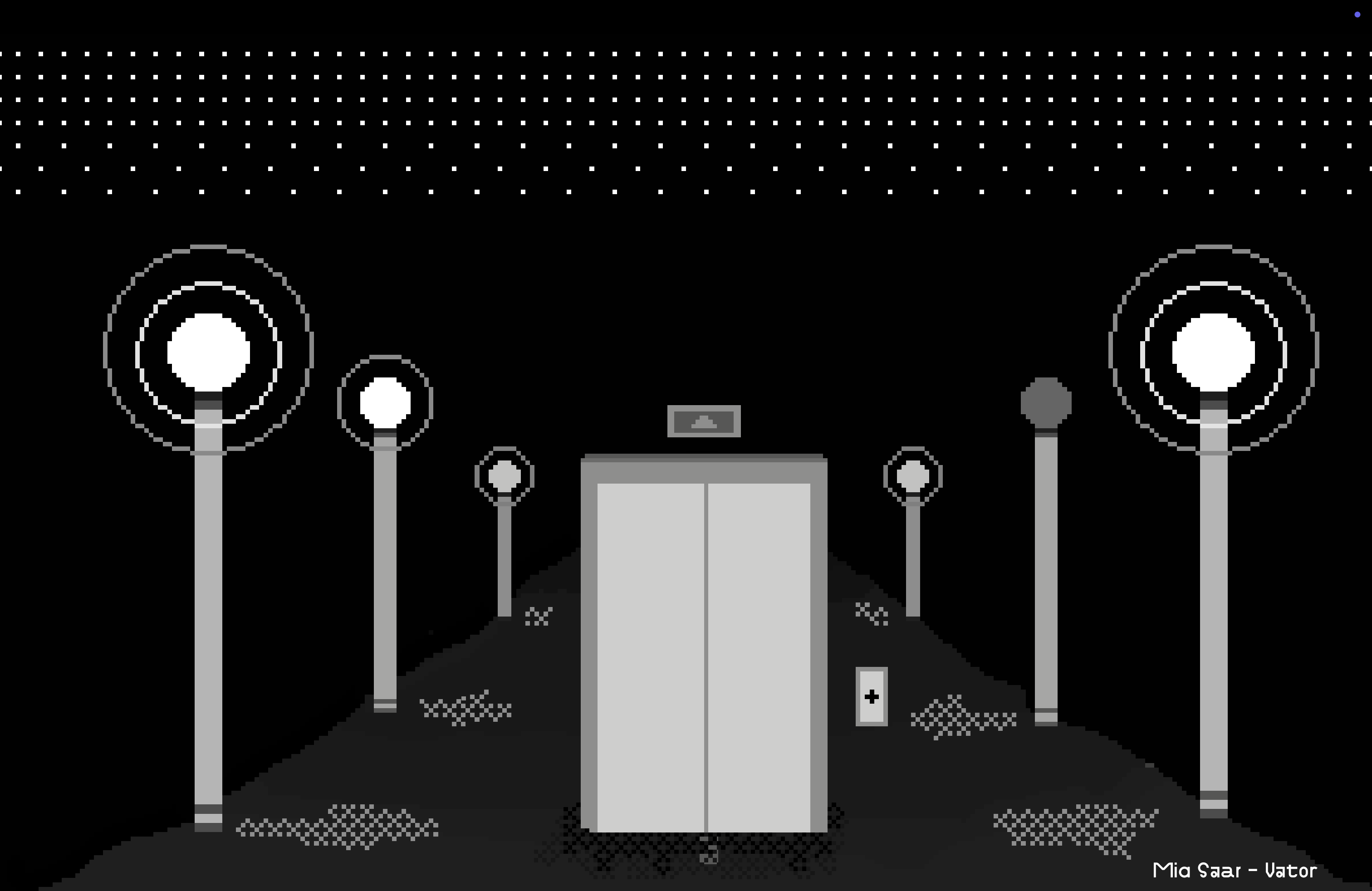
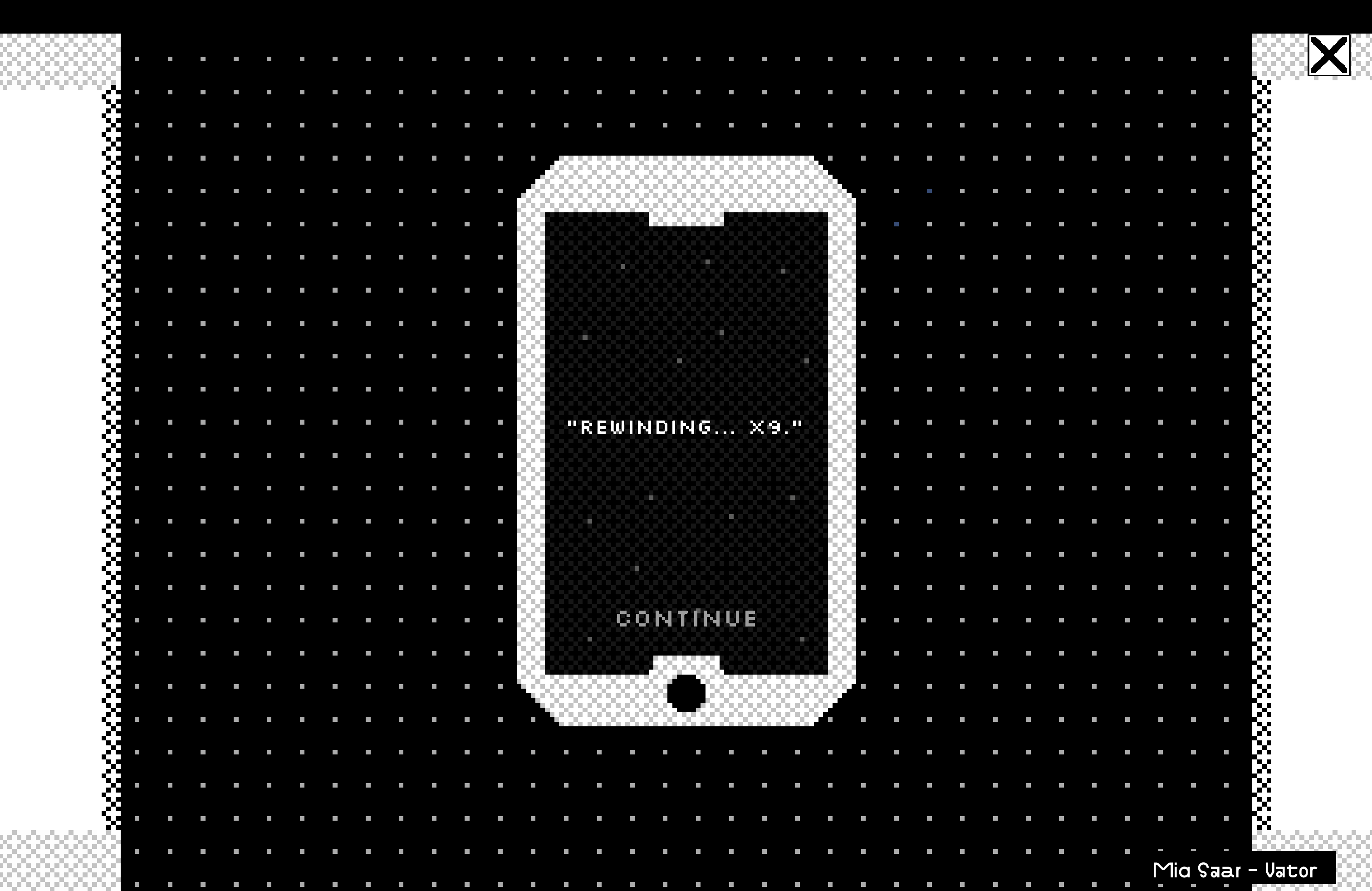
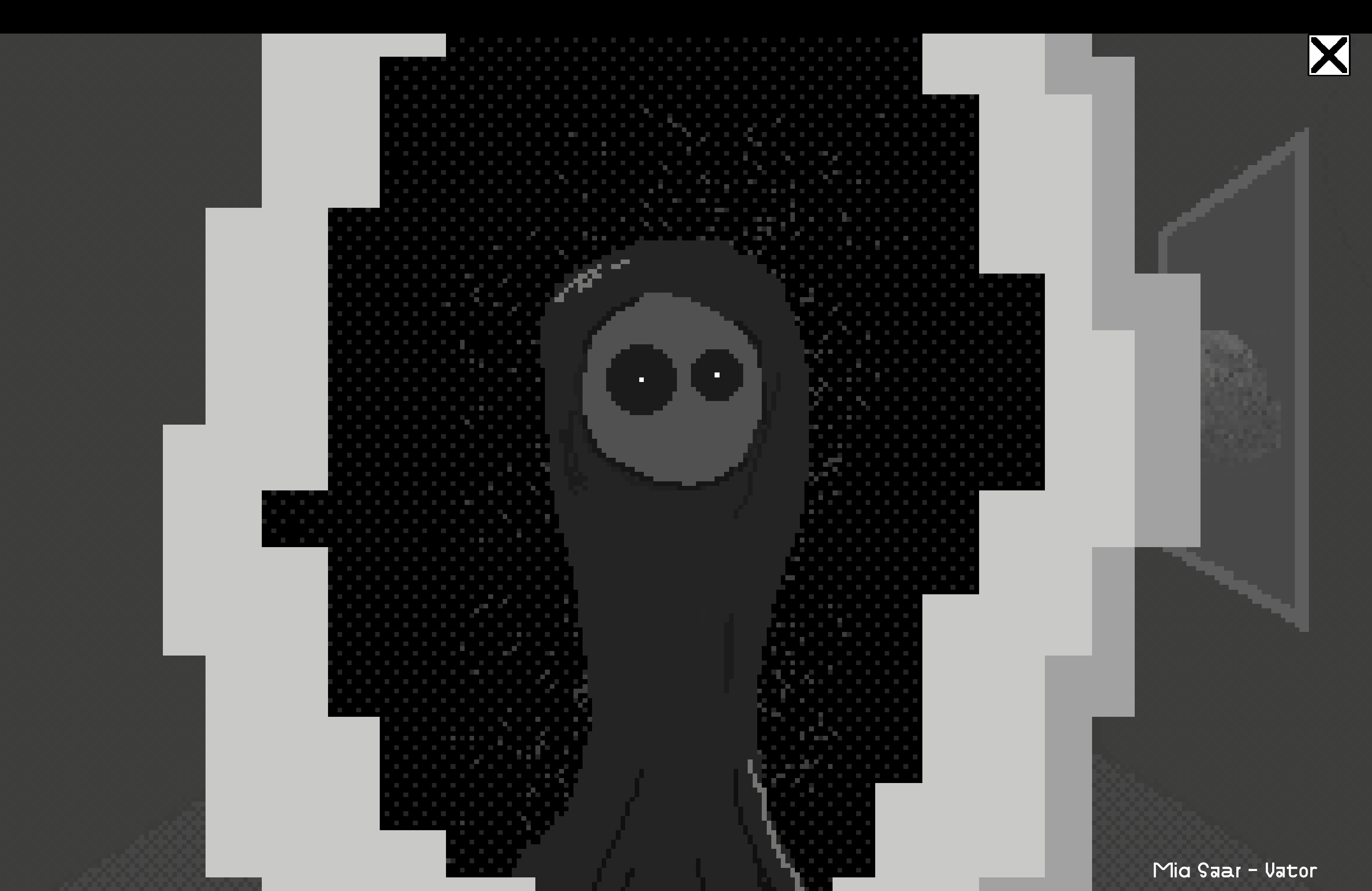
"At the center of my game VATOR is a monster trapped in a mysterious elevator world. The player's goal is to travel through different floors, solve the puzzles that appear in them, and notice clues that will eventually help them find a way out of the elevator.
On each floor, the player meets new characters who provide hints about the next floor - the correct order of completing the floors is crucial. The game ends when the player has correctly completed all necessary floors, but in the end credits, a question remains: did the player escape the elevator? Was it ever possible? It's a point-and-click style horror game, whose artistic style and atmosphere are created to induce claustrophobia and anxiety in the player, as if they were trapped in a closed elevator themselves."
Mia-Mai Roosberg - Apple Peel
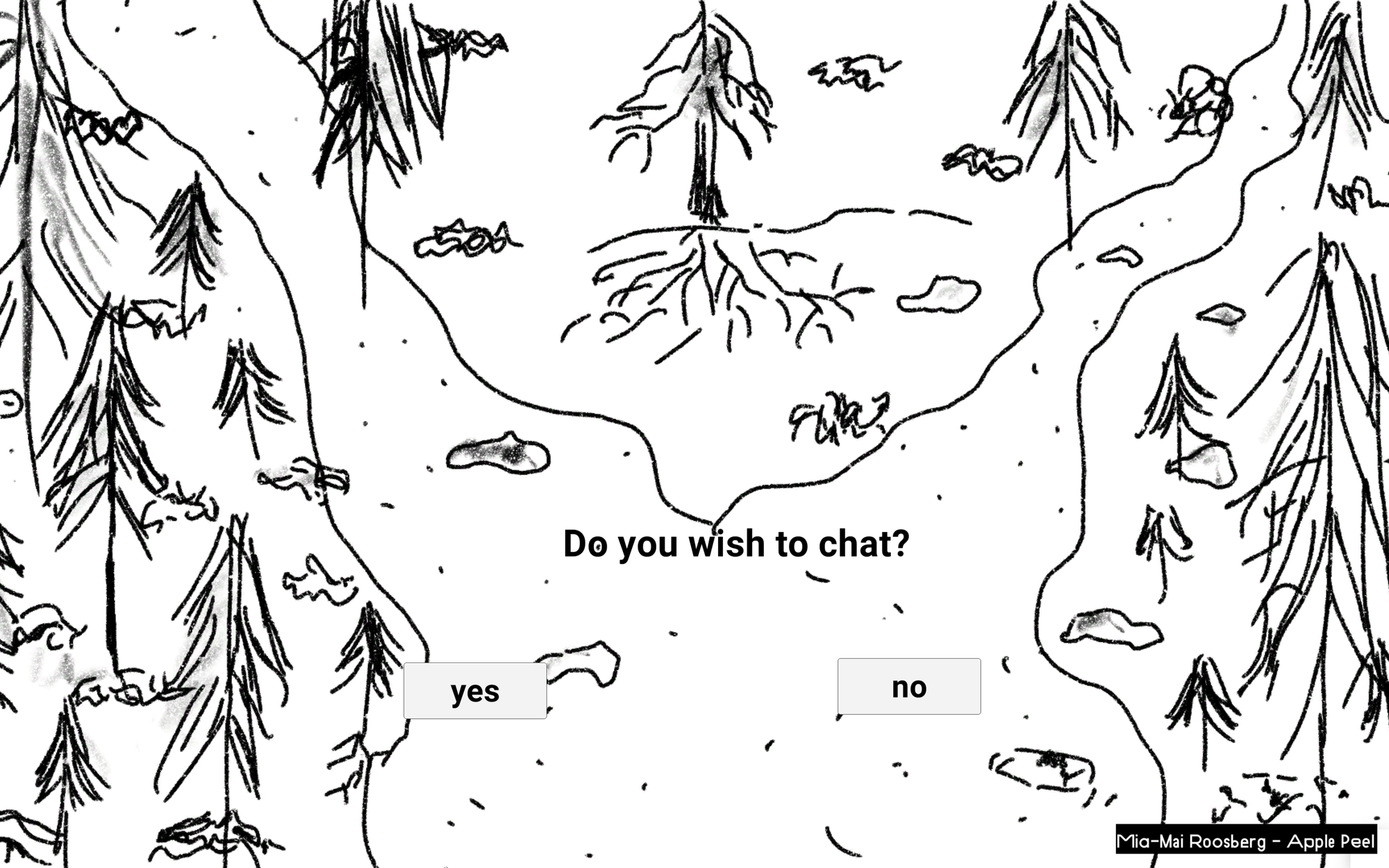
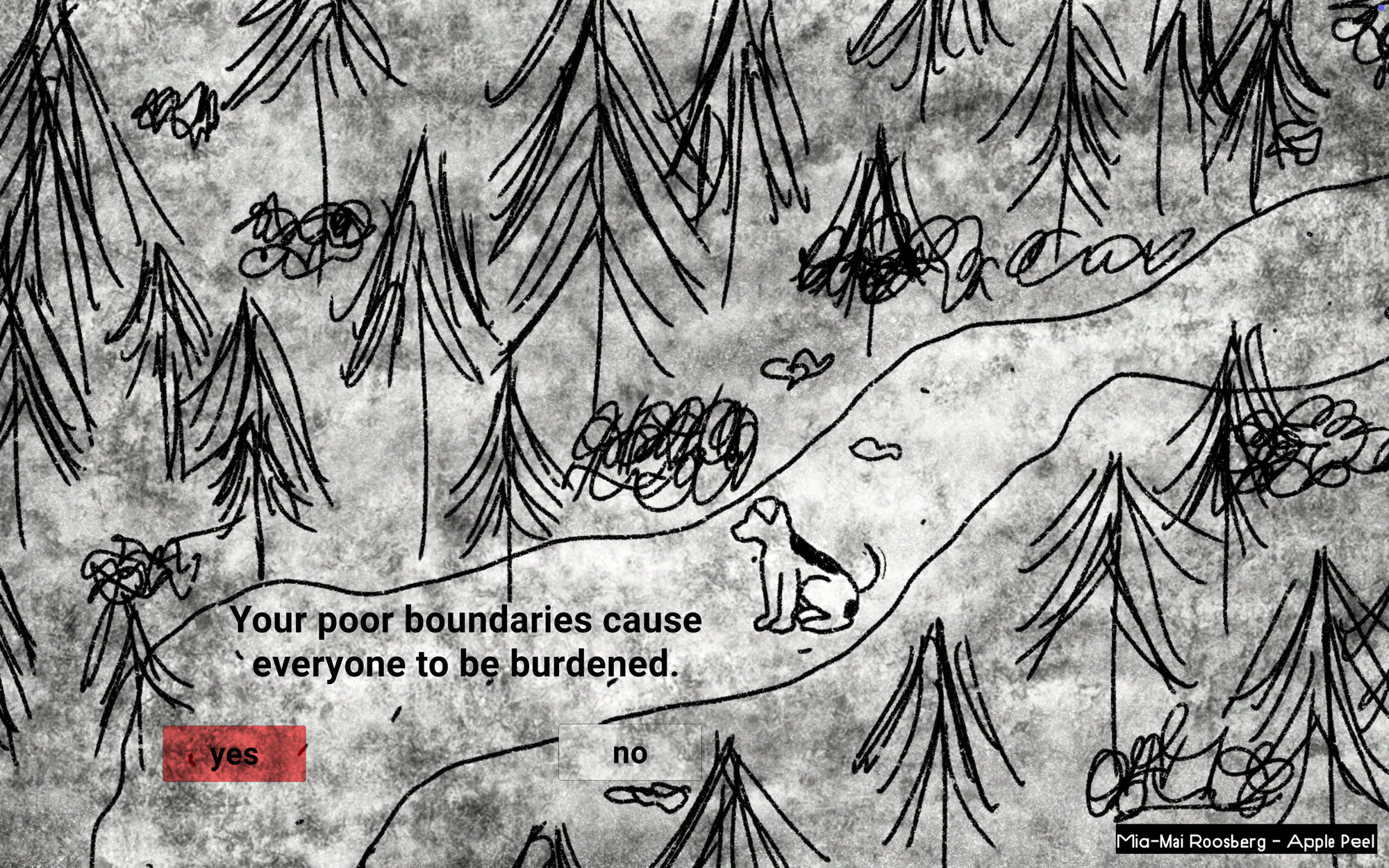
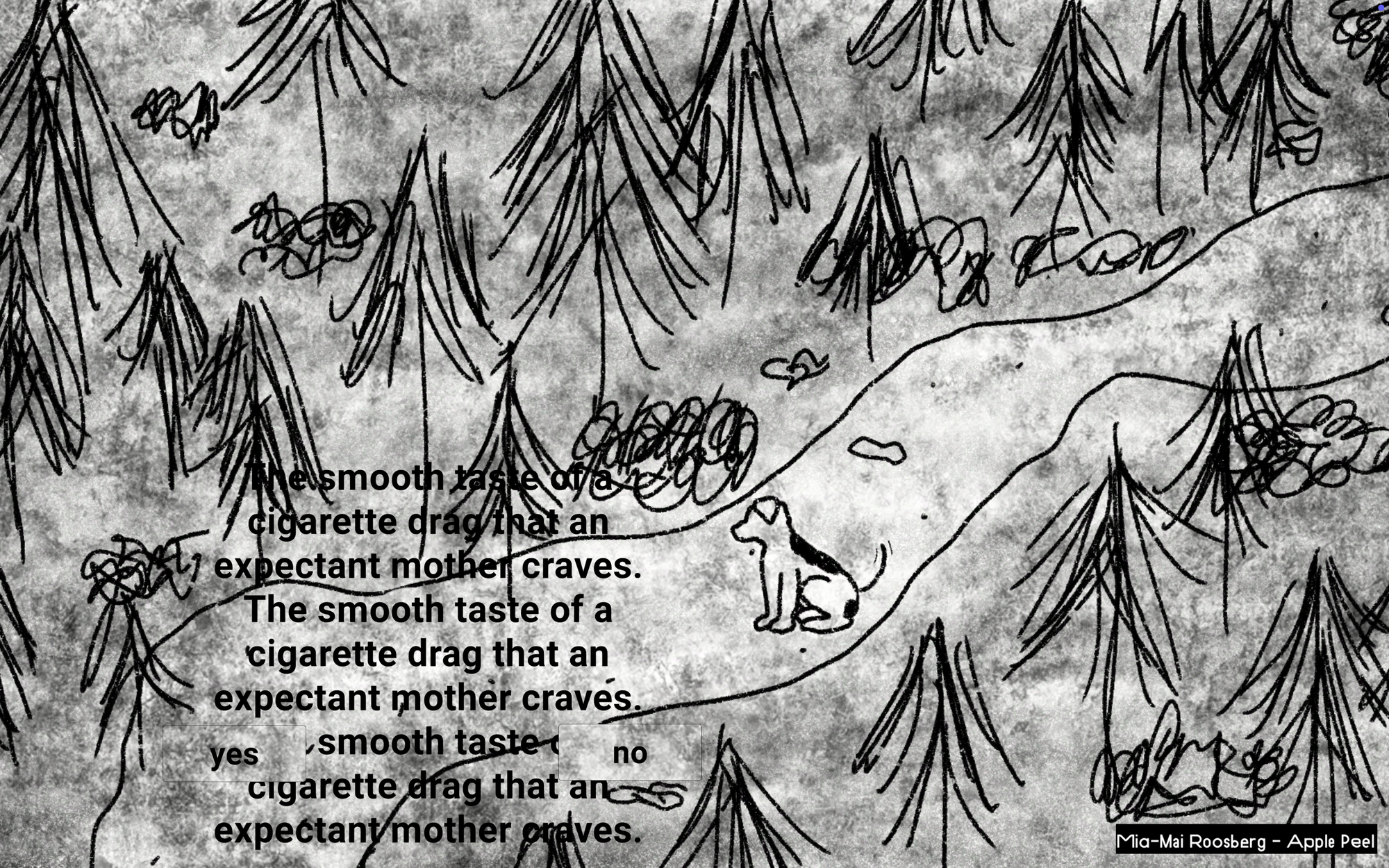
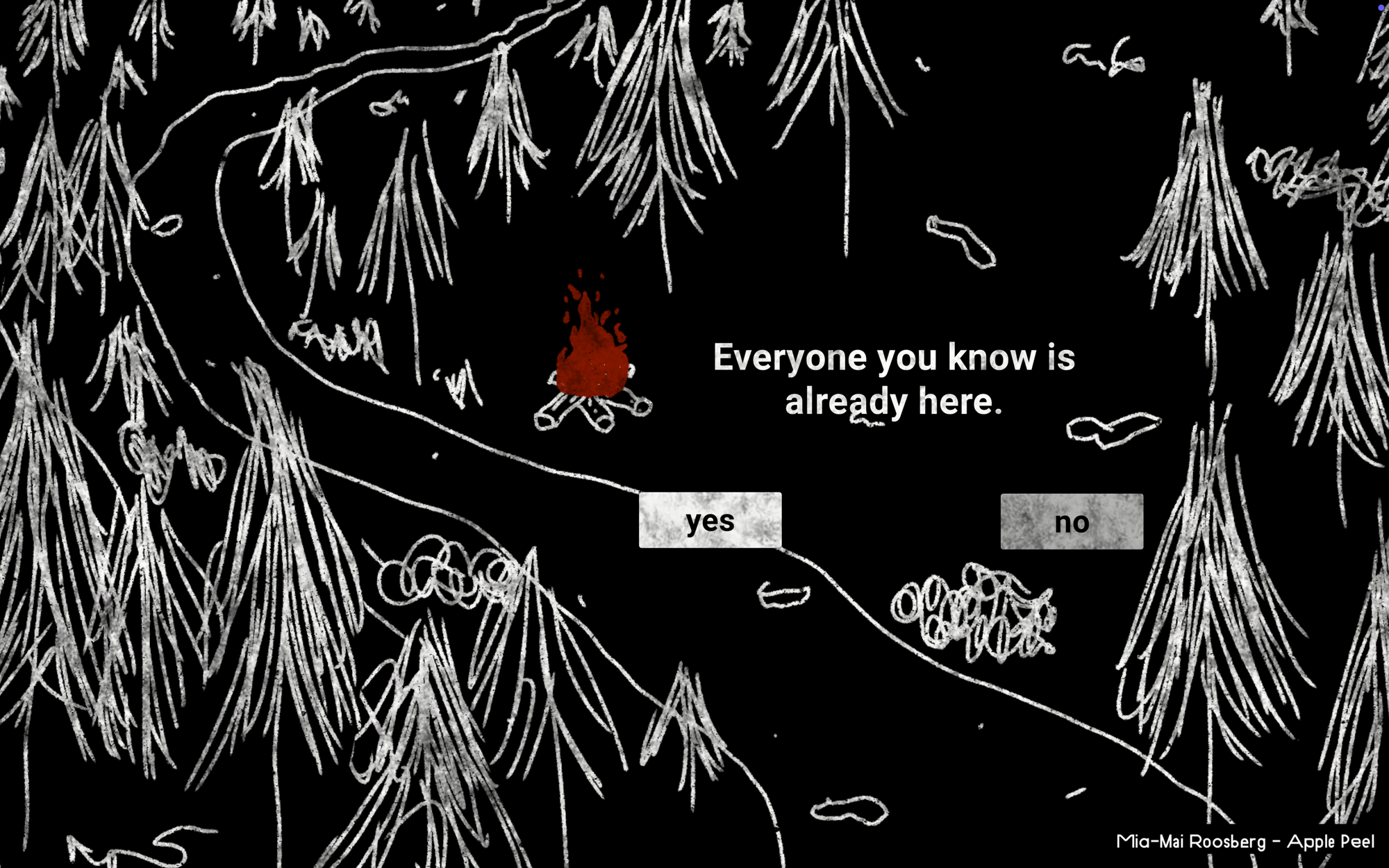
"Apple Peel is a 2D point-and-click video game with a unique visual style focused on morality-based storytelling. The game centers on three characters: the narrator, you (the player), and a dog. The action takes place in a lonely forest, creating an atmosphere that is simultaneously both bleak and tense, yet at times humorous and ironic. The game's philosophical core idea focuses on choices and human innate curiosity, including dark themes in the story where emphasis is placed on the illusion of choice versus actual choice.
We all need to take responsibility for our decisions in life and notice when it's better to draw the line. If something isn't right, there's really no one to blame but yourself. Even if things get out of your control, you're the one who decides how to respond to it all. The game has atmospheric sound design that includes forest sounds, various sound effects, and my own vocals to enhance the eerie atmosphere.
The overall experience is designed to create discomfort and mysteriousness while maintaining player attention through psychological elements and storytelling. The narrator has been given phrases from both pop and literary culture as well as religious texts. The game's design includes several conscious choices that might initially seem random or go unnoticed. Their symbolic meaning is left for everyone to figure out on their own."
Alex Kristjan Lumi - One Bad Dream
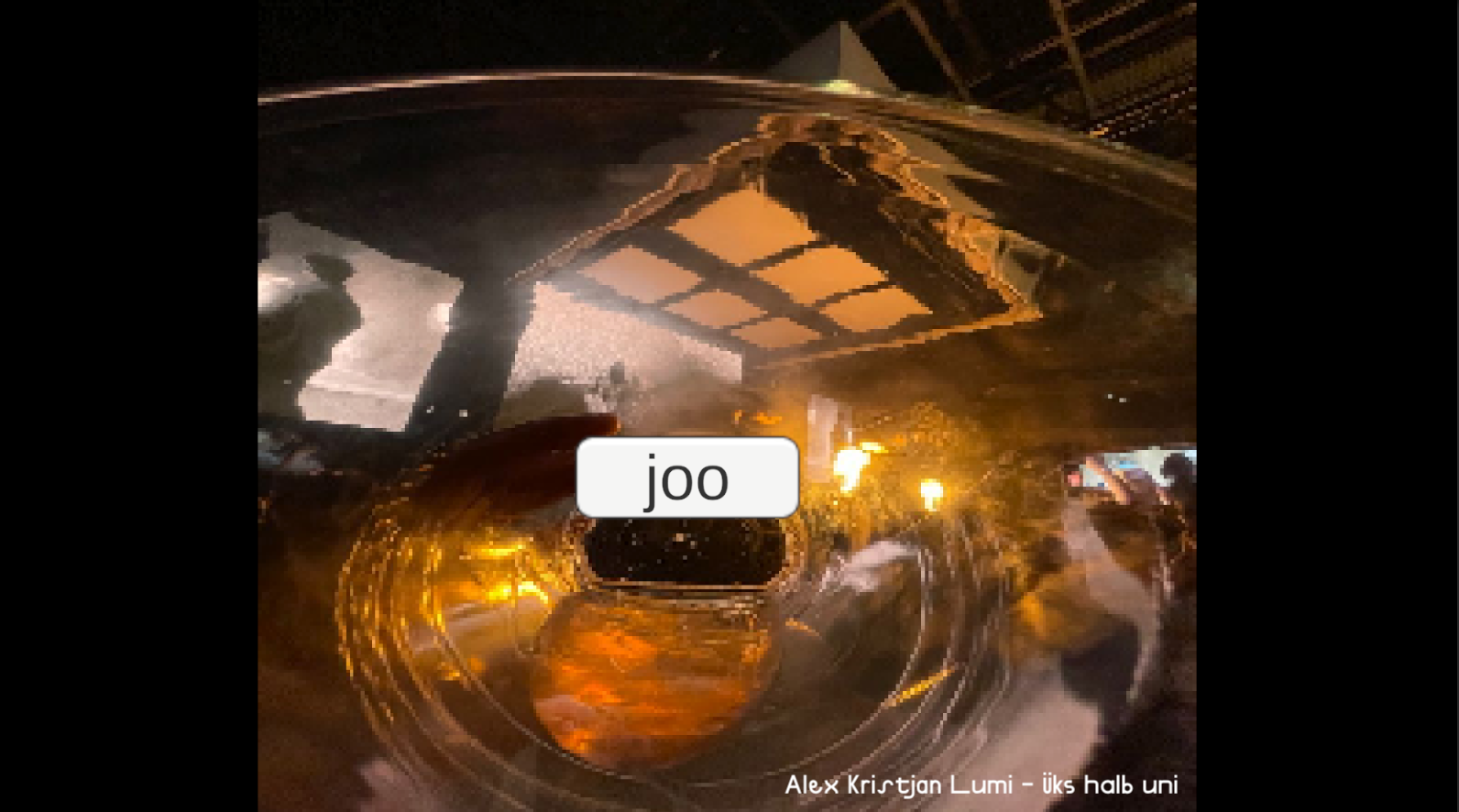
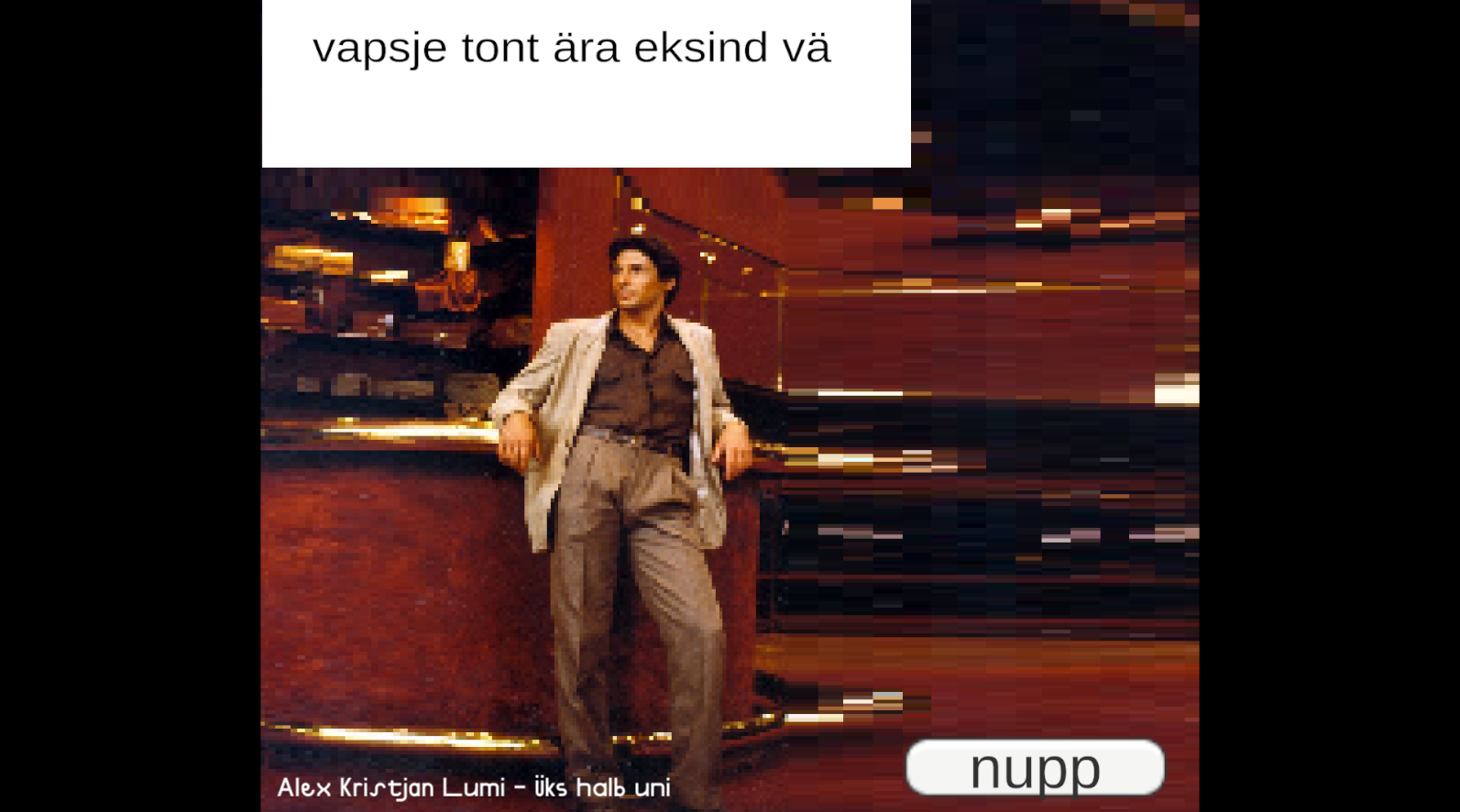
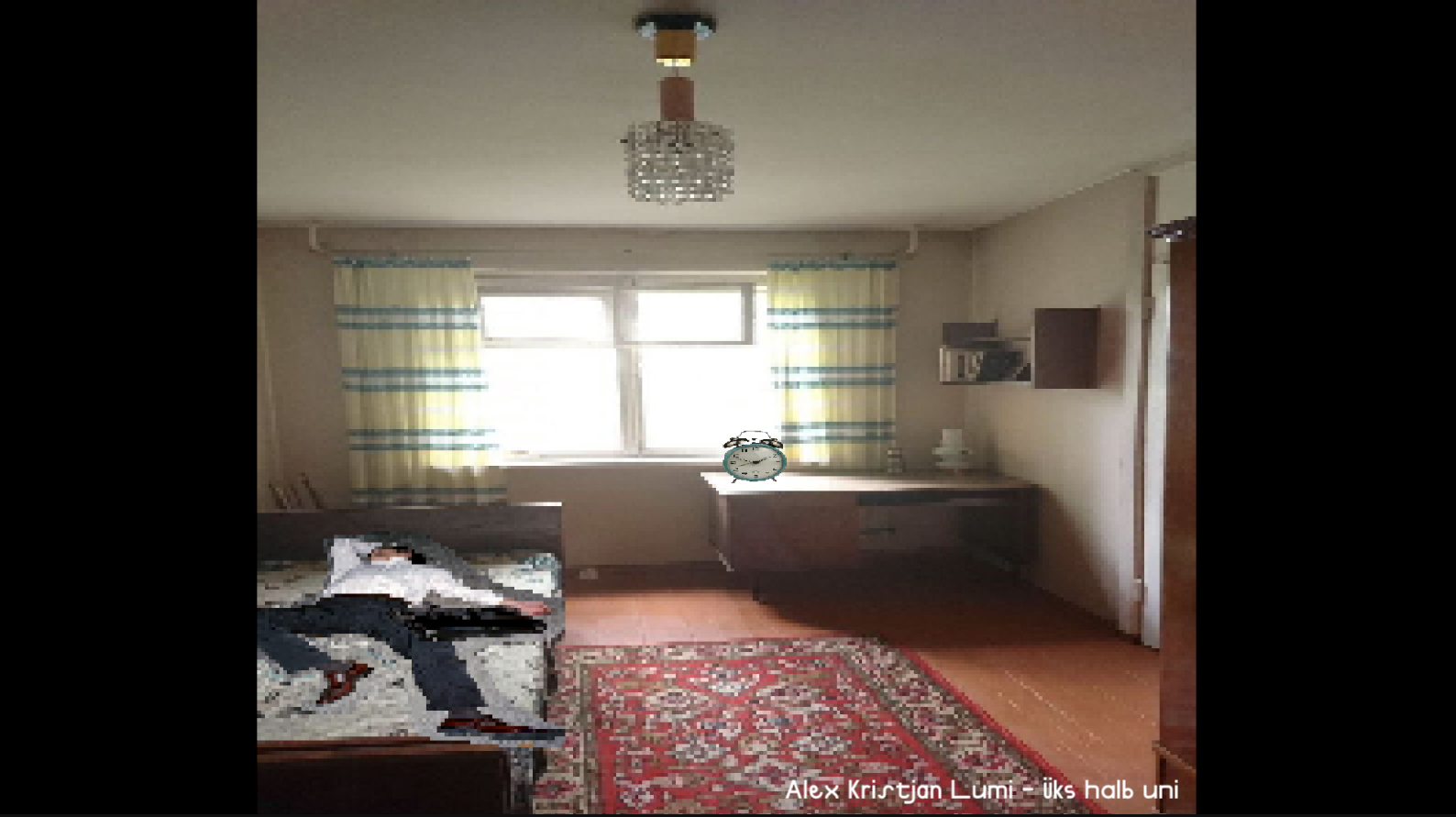
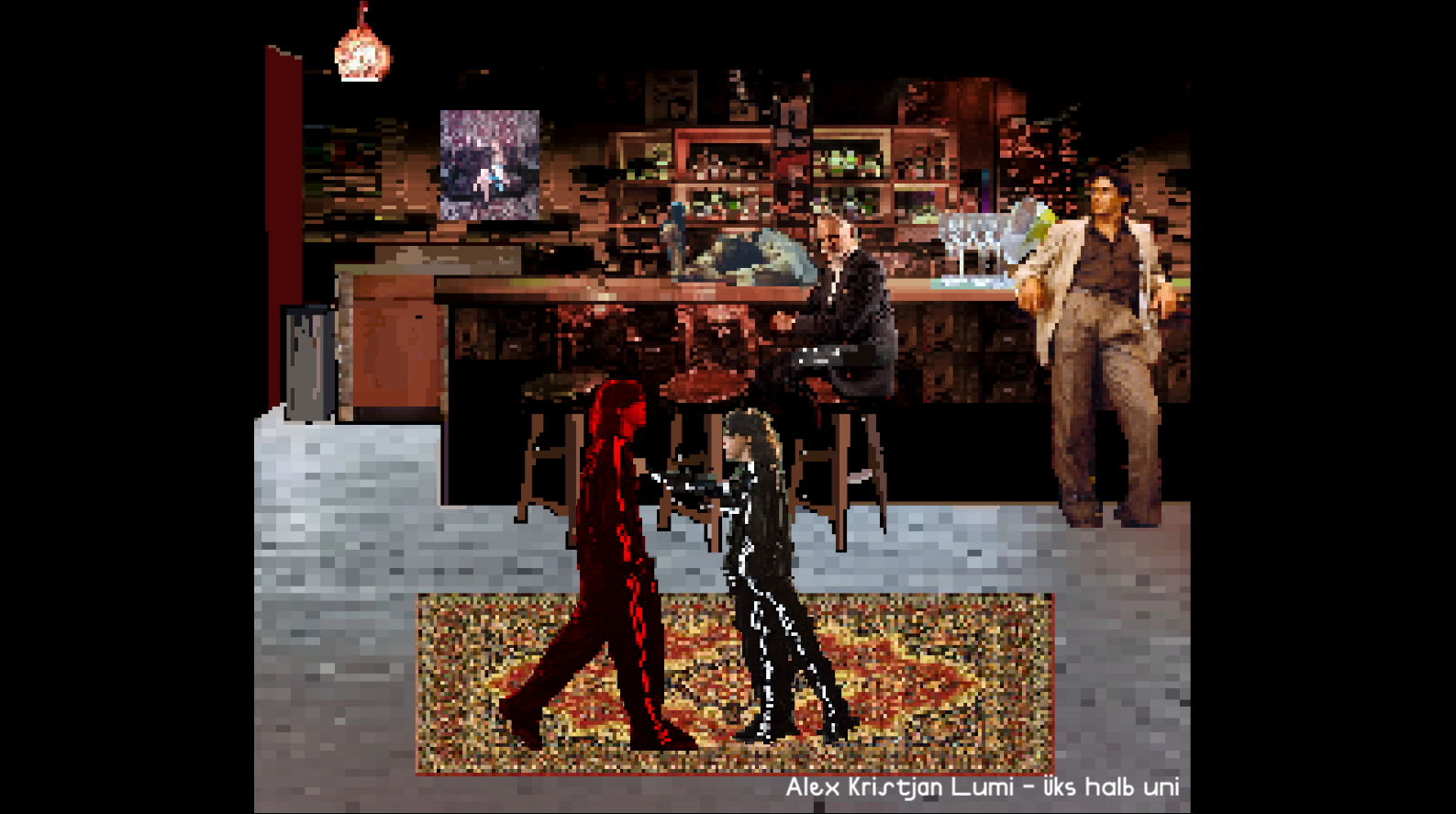
"The game One Bad Dream is a moral choice game where the main character must choose between good and bad. In their dream, they see what would happen if they had made a bad choice in a critical situation. The game pressures the protagonist from beginning to end, until the breaking point where one small situation can lead to a fateful decision that determines their future - and you, as the player, get to decide over it.
The game's illustrations use a 'Soviet-era' or post-Soviet aesthetic to create a depressive and melancholic mood. Although the game's universe is contemporary, the action takes place in an oppressive and gloomy mood-creating environment. Let's just say the game is still in development, but I've already received quite good feedback, which is good to move forward with."
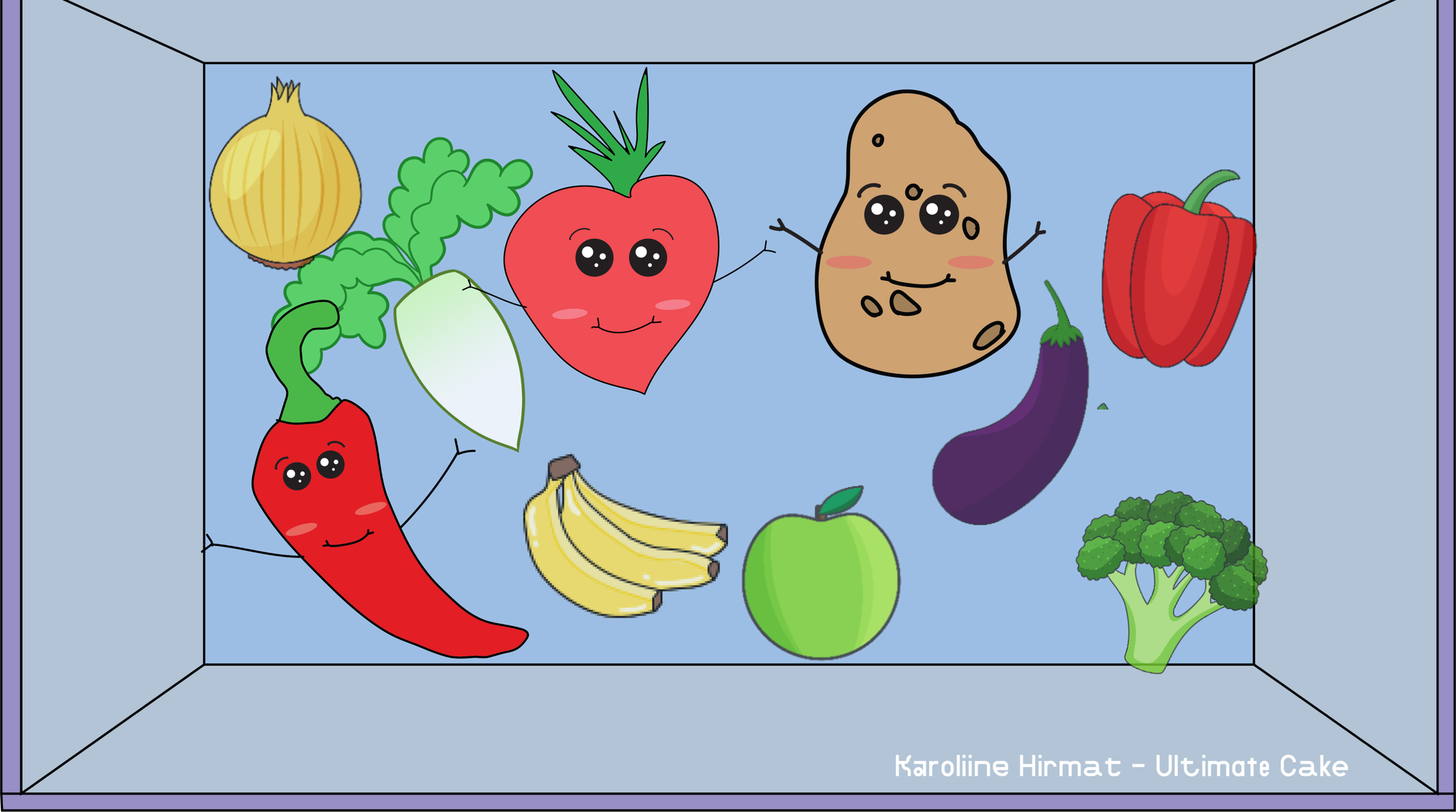
Karoliine Hirmat - Ultimate Cake
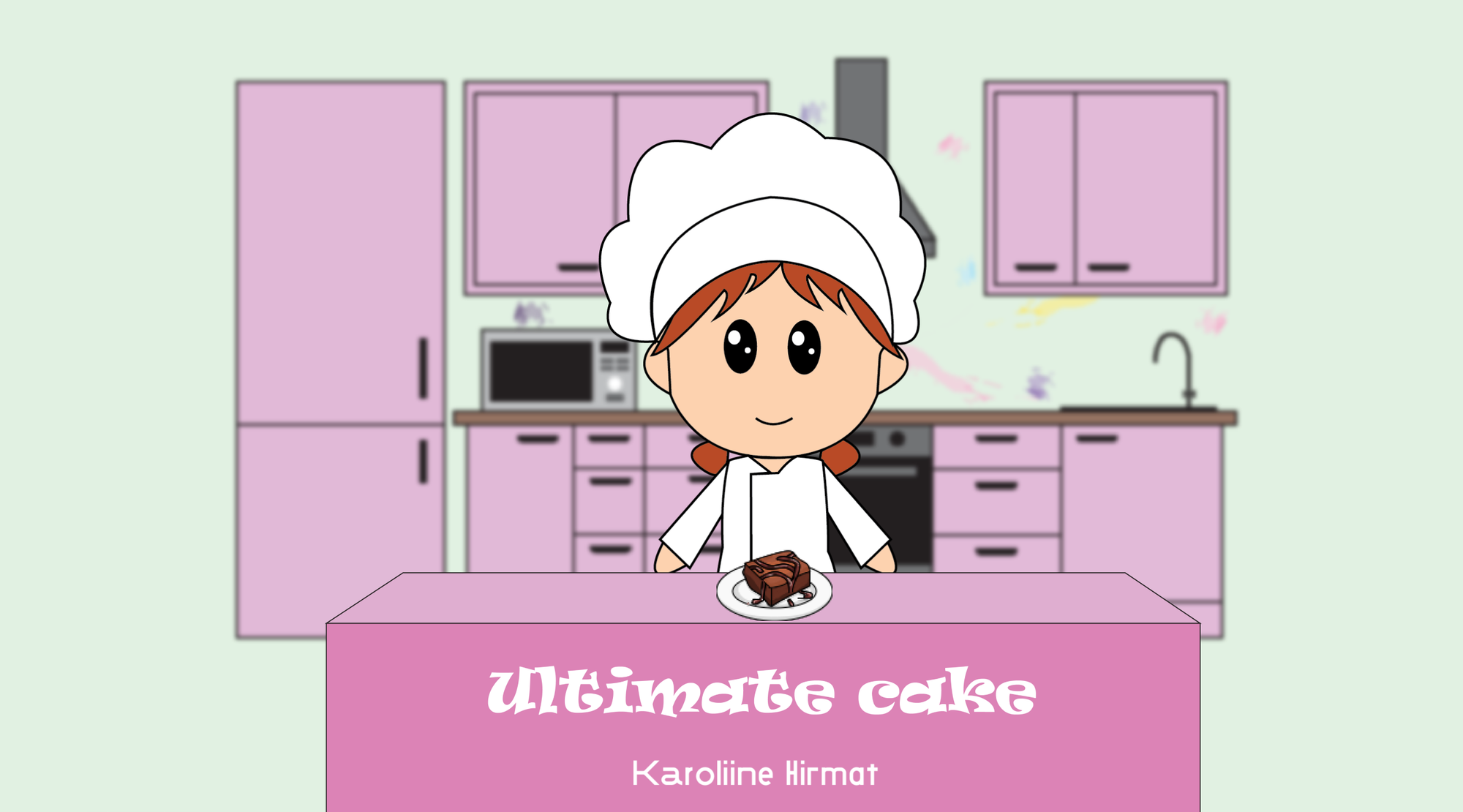
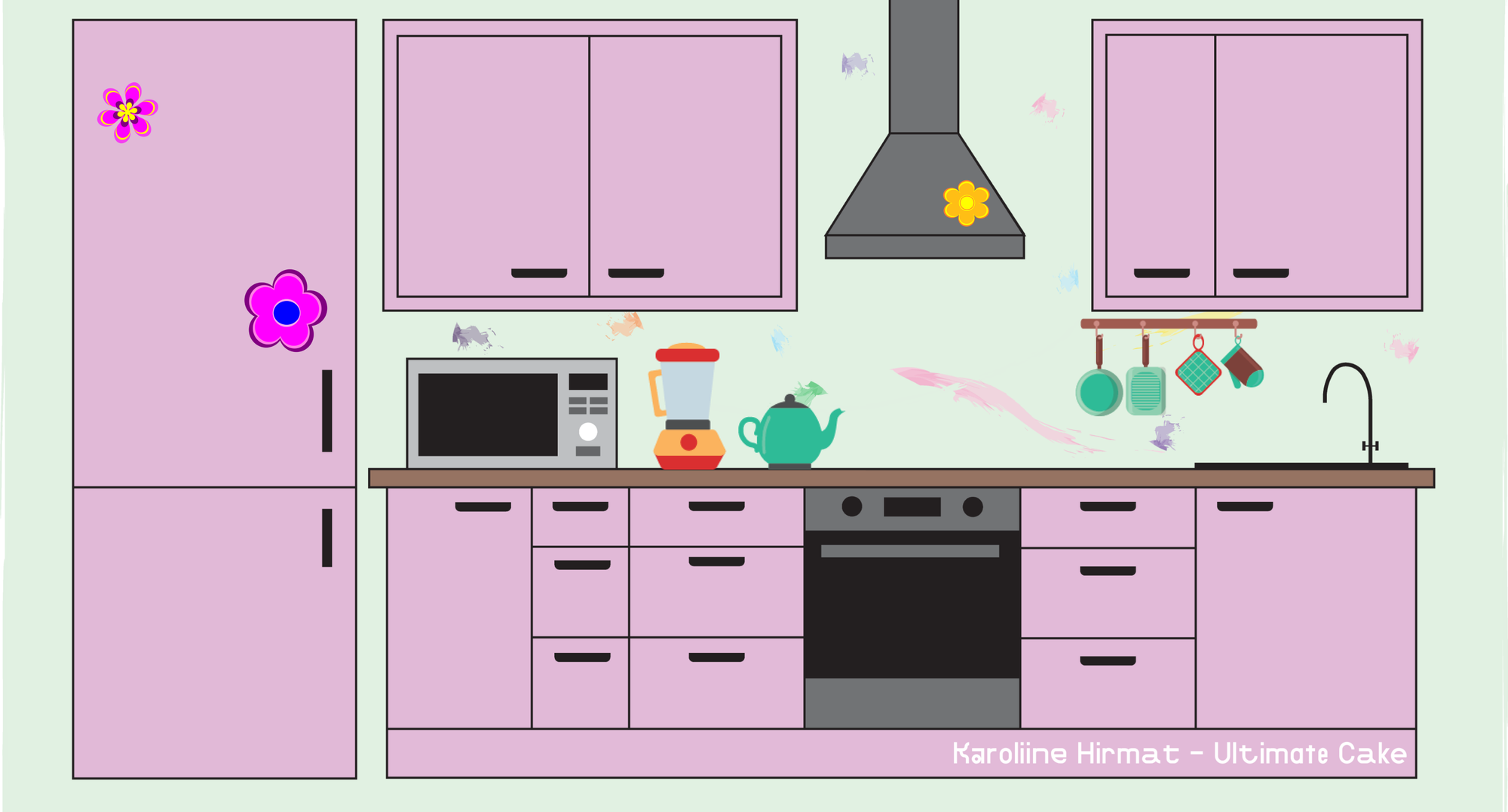
"My project Ultimate Cake is an entertaining game with cute visuals. The idea is to find ingredients from the kitchen and by collecting and baking them, prepare something truly tasty, which a world-famous chef then tries and gives their evaluation. Ultimate Cake was inspired by the game Bartender: The Right Mix."
In Conclusion
The game wasn't simply an end product in this course, but a method – a way to think, express, and test ideas in an interactive and dynamic space. Game design is one of the most direct forms of experience design, where the user doesn't watch from the side but participates. That's why game design holds an important position in our curriculum and invites students to discover creativity that can become both personal and social expression.